New 100 Famous Japanese Mountains
The New 100 Famous Japanese Mountains were selected by mountaineer Motoo Iwasaki as a fresh take on the classic list — one that weighs accessibility and ease of ascent so that hikers of all ages, including older adults, can enjoy them safely. The selection spans the country and highlights appealing peaks that differ from Kyuya Fukada's original choices.
This page currently covers 79 peaks from this list that you can reach by public transport. Most trailheads are served by bus from the nearest train station; for those that aren't, a shared taxi or regular taxi will get you there. Featured peaks include Kirigamine, Mt. Adatara, Mt. Aka and Mt. Akaishi. Each guide spells out the exact route from the station to the trailhead — bus and taxi timetables, fares, and frequencies verified against official schedules. Use the map and list below to compare access ease and fitness demand, whether you're planning a day hike or a multi-day traverse with an overnight stay beforehand.
New 100 Famous Japanese Mountains
Compare by the numbers
A multi-summit volcano with 23 peaks and seven lakes, the most accessible 3,000-meter mountain in Japan.
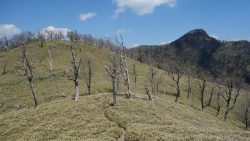
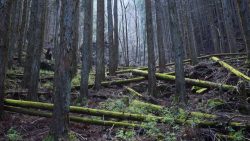
A deeply forested plateau receiving 4,000 mm of rain per year, mystical for the standing-dead-tree grove of Masaki-ga-hara and the Ōjagura cliff.
A revered Shugendo mountain in the southern Ōmine range, graced by a bronze Shakyamuni statue, sweeping Ōmine views, and spring Shiroyashio.
One of Japan's 100 Famous Mountains and an active volcano world-famous for its emerald crater lake Okama and winter snow monsters.
One of Japan's 100 Famous Mountains in Fukushima, where a gondola lifts you effortlessly into flowering alpine terrain.
An active volcano trailing fumarolic steam beside the mystical crater lake Onnetoé, immersed in Akan's raw nature.
One of Tohoku's finest alpine flora treasuries, ablaze with Komaкusa and Chinguruma in summer.
One of Japan's 100 Famous Mountains rich in primeval Buna and Himeshara forest, Amagi Rhododendrons, and vibrant seasonal color.
A table-top mountain shaped like an upturned ship, dominated by the 200-meter cliff face of Tomosohiwa.
The sacred headquarters of all Atago shrines nationwide, a spiritual mountain in Kyoto where the Sennichi-mairi pilgrimage marks summer.
One of Japan's 100 Famous Mountains known as the Aizu Fuji, whose great eruption created the mystical Goshiki-numa lakes.
The highest peak in the Hira range overlooking Lake Biwa, popular for its Buna forest and varied riverside approach.
The main summit of the Dewa Sanzan, a sacred mountain crowned by Gassan Shrine, with vast alpine wetlands and wildflowers.
A Tohoku classic with Japan's finest wetland-and-foliage scenery at Kenashinotai, and a soak in Sukayu Onsen waiting at the descent.
An active volcano captivating for its mysterious blue crater lake Majo-no-hitomi, the Jodō-daira wetland, and the Azuma Koфuji cone.
A Kansai peak topped by a pampas-grass summit plateau with big views over the Osaka Plain and Osaka Bay, and Katakuri blooms in spring.
The crowning peak of the Central Alps, reached by ropeway to the flower-filled Senjōshiki Kar and spectacular in all four seasons.
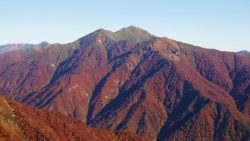
A Tohoku mountain incomparable in autumn, when its slopes transform into three layers of color in late September, earning the title of the divine carpet.
The dominant peak of the Sobo-Katamuki range in Kyushu, mantled in primeval forest and Akebono azaleas with a superb summit view.
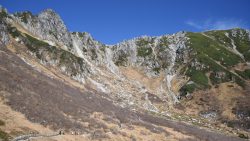
A twin-peaked mountain offering a 360-degree panorama, stunning in autumn when rock walls and foliage create dramatic contrasts.
A sacred northern-Alps mountain where ptarmigan roam and snowmelt triggers a sea of alpine flowers, one of Japan's great religious peaks.
A twin-peaked sacred mountain celebrated in the Man'yōshū, with a 360-degree view of the Kanto Plain from both Nantai-san and Nyotai-san.
One of Japan's 100 Famous Mountains in Shikoku, with a broad grassy summit of Miyama Kumazasa that gives an open, sky-high sense of freedom.
A graceful isolated peak called the Dewa Fuji, home to over 330 alpine plant species including several found nowhere else.
Hokkaido's highest peak, called the Garden of the Gods, with Japan's earliest autumn foliage and vast alpine terrain.
The highest peak in western Japan, a spiritual mountain famous for fixed-chain cliff faces and, in clear weather, views across the Seto Inland Sea.
The graceful Tsugaru Fuji and sacred heart of Tsugaru, with the Iwakisan Shrine inner sanctum enshrined at the summit.
The northern sentinel of the southern Alps, nicknamed the Southern Alps Prince for its striking white granite ridgeline.
A popular Ushiro-Tateyama peak reached by the Alpine Line, where the Hakuba trio and the treacherous Kaeri-no-Ken ridge steal the show.
An ancient sacred mountain of the Oku-Chichibu ridge, its iconic Gojōiwa pillar towering above, with views to the southern Alps and Yatsugatake.
An accessible one of Japan's 100 Famous Mountains with sweeping Nikkō Day-lilies, Rengeツツジ, autumn grasses, and high wetland.
A quiet peak in front of the southern Alps, beautiful for its iris meadows on the Ayame plateau and ancient moss-draped primeval forest.
A Nikko sacred mountain requiring a relentless 1,200-meter ascent from Lake Chūzenji, crowned by Futarasan Shrine's inner sanctum.
A great isolated sacred mountain with the mystical Ni-no-ike crater lake, its sweeping summit view simply described as unrivaled.
One of Japan's 100 Famous Mountains near the Afuri Shrine, perennially busy with pilgrims and hikers drawn by its flowers in every season.
A Kansai classic with a rewarding traverse from the Rock Garden to the highest summit, famous also for Kobe's glittering night views.
One of Japan's 100 Famous Mountains in Chichibu with a jagged rocky ridge and Shugendo history, lit by Akayashio in spring and foliage in autumn.
The Queen of the Southern Alps, a triple-cirque mountain carpeted with alpine flowers and known for its gentle, welcoming profile.
The highest point of UNESCO World Heritage Shirakami-Sanchi, a summit of virgin Buna forest with a refuge hut just below the top.
A twin-peaked mountain famed for its silhouette and the golden autumn grass of Sasadaira, Echigo's flower and foliage gem.
A shapely isolated peak known as the Ono Fuji, popular for its views of Hakusan and brilliant autumn foliage.
One of Japan's three sacred mountains, a spiritual peak carpeted with alpine flowers beginning with the Hakusan Ichige that bears its name.
The Nanbu Fuji and symbol of Iwate Prefecture, renowned for its massive Komaкusa colony and the thrilling crater-rim walk.
A three-summited mountain in the Ushiro-Tateyama range whose south-facing slopes erupt with Komaкusa and Hakusan Furo in early summer.
A handsome stratovolcano known as the Echigo Fuji, connected by a flower-rich traverse to Hiuchigatake with sweeping views.
The Rishiri Fuji rising from the sea, a treasury of alpine plants with the island-ringed ocean as an extraordinary backdrop.
Called the Queen of the Alps for its white granite ridge adorned with Komaкusa, the classic gateway mountain to the northern Alps.
The Ezo Fuji, a perfectly symmetrical cone, extraordinary for its crater-rim walk and more than 130 species of alpine plants.
The most popular route up Japan's highest mountain, ascending via the well-equipped Yoshida trailhead.
A remote Echigo peak said to be the hardest single-day 100 Famous Mountain, crowned by an alpine wetland, bog pools, and the iconic Tamago stone.
A three-peaked range of white sand ridges, towering boulders, cascades, and the iconic Obelisk, with commanding views of Kitadake and Fuji.
Tokyo's highest peak at the eastern end of the Oku-Chichibu, a one of Japan's 100 Famous Mountains reward after a long walk through primeval forest.
The highest peak of the Asahi range, Tohoku's finest mountain for its massed Himesayuri ridge colonies and views of Gassan and Chōkaisan.
A northern-Alps classic combining Japan's greatest snowfield, sweeping flower meadows, and the optional Hakuba Yari hot spring on a traverse.
The hardest peak on a standard route in Japan, with its Kani-no-Yokobai and Tatebai fixed chains delivering a supremely rewarding summit.
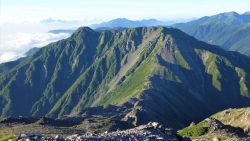
The fourth-highest peak in the southern Alps, a massive mountain that embodies the name of the Akaishi range.
A celebrated peak along Tanigawa's jagged ridge, colored by autumn foliage and early-summer wildflowers.
The crowning peak of the Yatsugatake range, rewarding climbers with a rocky ridge and a sweeping 360-degree panorama.
A route up Japan's highest peak via the Gotenba and須走口trailheads, celebrated for the exhilarating sand-run descent.
A soaring cluster of peaks led by Okuhotakadake, Japan's third-highest, spectacular for summer alpine flora and Karasawa's autumn foliage.
The southern end of the Shirane trio, with a 3,000-meter ridge descending from Ainodake to a close-up view of Fuji.
One of Japan's 100 Famous Mountains standing alone in the central southern Alps, a deep-mountain panorama that rewards the long approach over Sanbutu Pass.
The Spear of the Northern Alps, whose thrusting summit silhouette is the symbol of Japan's high mountains and the aspiration of countless climbers.
An active volcano with one of the world's largest calderas, offering dramatic views of the Nakadake crater and Kusasenri grassland.
A peak in the Oku-Mino highlands bearing a Dainichi Buddha statue, with a direct view of the Hakusan range.
One of Japan's 100 Famous Mountains — the graceful Hoki Fuji — renowned for western Japan's largest Buna forest and groves of Daisen yew.
The highest point of the Hakone caldera with views of Fuji over Lake Ashinoko, its trails reopened after a decade-long closure.
One of Japan's three Hikosan sacred peaks, a triple-summit mountain long used for Shugendo practice with spectacular autumn color.
The highest peak in Hyogo and the second-highest in the Chugoku region, delightful for its Buna forest and airy ridge walking.
The Satsuma Fuji rising sharply from the sea, whose spiral trail delivers views stretching to Sakurajima and Yakushima.
A pastoral viewing ridge connecting three grassy summits with a gentle traverse, looking up to Daisen's majestic bulk.
A vast volcanic cluster harboring Kyushu's mainland highest peak, celebrated for Bogatsuru wetland, Miyama Kirishima azaleas, and autumn color.
A mountain of legend where twin snow silhouettes appear on the slopes each spring, sheltering Buna forest and views of Hakusan and the northern Alps.
A Shimane volcanic peak enjoyable as a caldera loop, with mountain views including Hakusan opening from the grassy outer rim.
The sacred peak of the Divine Descent myth, a perfect cone topped by the reversed spear Ama-no-Sakahoko, speaking of ancient legend.
The Bungo Fuji, a twin-peaked volcano looming above Yufuin Onsen, with sweeping views of the Yufuin Basin from the east summit.