
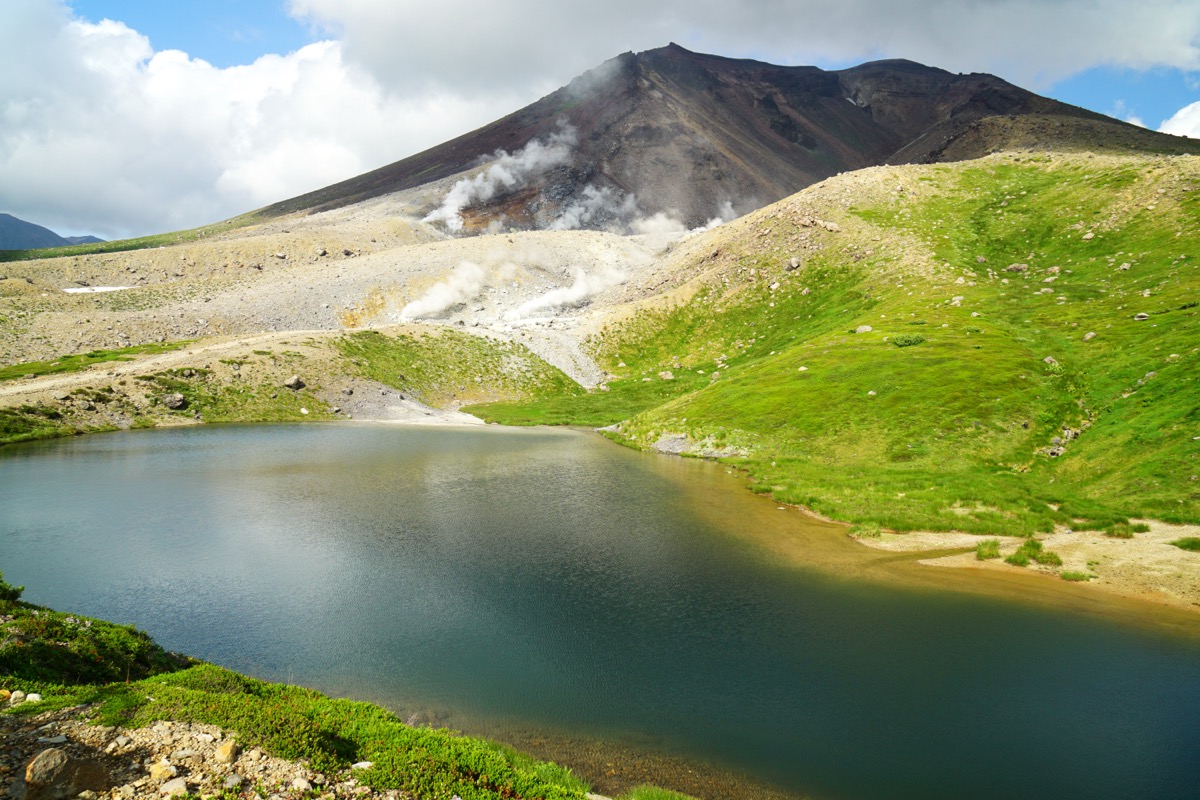
Daisetsuzan (大雪山, lit. “great snow mountains”) is a vast volcanic mountain group in central Hokkaido whose principal peak Asahi-dake (旭岳, 2,291 m) is the highest mountain in Hokkaido. Named Kamuy Mintar (the “Garden of the Gods”) by the Ainu, it sits within Daisetsuzan National Park — Japan’s largest national park — and is counted among the 100 Famous Mountains of Japan (Kyūya Fukada’s selection).
Although only 2,000 m class, its alpine environment rivals the 3,000 m peaks of Honshu, and it is famous for Japan’s earliest autumn colours (late August to early September). Access has two main gateways — Asahidake Onsen (Asahidake Ropeway, ~4-hour Asahi-dake out-and-back from Sugatami Station 1,600 m) and Sounkyo Onsen (Kurodake Ropeway + lift, ~3-hour Kuro-dake out-and-back from the 7th station 1,520 m). The traverse between them (~8 hours, circling the Ohachi-daira crater) is one of Hokkaido’s signature high-mountain routes.
How to access the trailheads
- [Outbound] Sapporo / New Chitose Airport → Asahikawa Station (JR Lilac/Hokuto Express, or flight)
- [Round trip] Asahikawa Station ⇔ Asahidake Ropeway (Asahikawa Denkikidou Ide-yu Bus, route 66)
- [Round trip] Asahikawa Station ⇔ Sounkyo (Dohoku Bus Sounkyo Line, route 81)
- Ropeway details (Asahidake / Kurodake) and trail overview, suggested plans
Standard times (Asahi-dake out-and-back from Sugatami Station, easy, ~4 hours)
Sugatami Station (1,600 m) → (1 hr 30 min) → Asahi-dake summit (2,291 m, Hokkaido’s highest) → (1 hr 30 min) → Sugatami Station → Sugatami-no-ike pond loop (~30 min, optional)
Standard times (Kuro-dake out-and-back from the 7th station, easy, ~3 hours)
Kurodake Ropeway 7th Station (1,520 m) → (1 hr 30 min) → Kuro-dake summit (1,984 m) → (1 hr) → Kurodake Ishimuro junction → (1 hr) → 7th Station
Standard times (Asahi-dake to Kuro-dake traverse, intermediate, ~8 hours + recommended overnight)
Sugatami Station → (1 hr 30 min) → Asahi-dake → (1 hr) → Mamiya-dake (2,185 m) → (40 min) → Hokkai-dake (2,149 m) → Ohachi-daira rim → (1 hr 30 min) → Kurodake Ishimuro emergency hut (overnight) → (40 min) → Kuro-dake → (1 hr) → 7th Station → Ropeway → Sounkyo
1. [Outbound] Sapporo / New Chitose Airport → Asahikawa Station (JR Limited Express, or flight)
The Hokkaido-side base for Daisetsuzan is Asahikawa Station. From Sapporo, JR Hakodate Main Line Limited Express Lilac/Kamui takes about 1 h 25 min for ¥4,810 (reserved). From New Chitose Airport, transfer at Sapporo to JR for about 2 h 30 min (~¥7,860). From Tokyo or Osaka, direct flights to Asahikawa Airport (JAL/ANA/AirDo) take about 1 h 35 min – 2 h, with airport shuttle bus to central Asahikawa about 35 min and ¥750. If you are heading straight for Asahidake Onsen, take the “Ide-yu Bus” (see Section 2) from Asahikawa Airport — the route serves the airport — so you can skip central Asahikawa entirely.
Reference : JR Hokkaido
Inquiries : JR Hokkaido Asahikawa Station ☎0166-25-6736
2. [Round trip] Asahikawa Station ⇔ Asahidake Ropeway (Asahikawa Denkikidou Ide-yu Bus 66)
The Asahi-dake-side base of Asahidake Onsen and the Daisetsuzan Asahidake Ropeway base station are served year-round by Asahikawa Denkikidou route 66 “Ide-yu Bus” (Asahikawa Station → Asahikawa Airport → Asahidake Onsen Iriguchi → Asahidake), revised 1 Oct 2024 and updated 1 Oct 2025. There are 4 round trips a day; the ride takes about 1 h 48 min, with a one-way fare of ¥1,800 (Asahikawa Station ⇔ Asahidake). Because the route passes Asahikawa Airport, it is convenient for arriving air travellers.
Operating period : Year round, 4 round trips daily
Travel time / Fare : Asahikawa Station → Asahidake ~1 h 48 min / adult ¥1,800
Asahikawa Airport → Asahidake ~1 h 15 min / adult ¥1,270
Departures (Asahikawa Station) : 07:15 / 09:15 / 12:15 / 14:15
Asahikawa Station → Asahidake Onsen Iriguchi → Asahidake (Asahikawa Denkikidou Ide-yu Bus 66, via airport, all runs daily)
| Asahikawa Station dep. | Asahidake Onsen Iriguchi arr. | Asahidake arr. |
|---|---|---|
| 07:15 | 08:49 | 09:03 |
| 09:15 | 10:49 | 11:03 |
| 12:15 | 13:49 | 14:03 |
| 14:15 | 15:49 | 16:03 |
Asahidake → Asahikawa Station (Asahikawa Denkikidou Ide-yu Bus 66, return, all runs daily)
| Asahidake dep. | Asahikawa Station arr. |
|---|---|
| 09:55 | 11:33 |
| 11:55 | 13:33 |
| 14:55 | 16:33 |
| 16:55 | 18:33 |
Note : “Asahidake” stop is at the ropeway base station (1,100 m). Missing the last bus (16:55) means lodging at Asahidake Onsen or a taxi to Asahikawa (¥15,000+). In winter the same line serves Asahidake Onsen Ski Resort.
Reference : Asahikawa Denkikidou Route 66 Asahidake Line “Ide-yu Bus” | Daisetsuzan Asahidake Ropeway official
Inquiries : Asahikawa Denkikidou ☎0166-23-3355 / Asahidake Ropeway ☎0166-68-9111
3. [Round trip] Asahikawa Station ⇔ Sounkyo (Dohoku Bus Sounkyo Line, route 81)
The Kuro-dake-side base of Sounkyo Onsen is served by Dohoku Bus route 81/83 “Sounkyo Line” (Asahikawa Station ↔ Sounkyo), taking about 1 h 59 min for ¥2,140 one way, with 4–5 runs per day (revised 2026/4/1). From the Sounkyo bus terminal it is about 5 minutes on foot to the Kurodake Ropeway base station.
Asahikawa Station → Sounkyo (Dohoku Bus Route 81, hiker excerpt, all runs daily)
| Asahikawa Station dep. | Sounkyo arr. |
|---|---|
| 06:55 | 08:54 |
| 09:55 | 11:54 |
| 10:55 | 12:54 |
| around 13:55 | around 15:54 |
| around 17:30 | around 19:29 |
Sounkyo → Asahikawa Station (Dohoku Bus, return, excerpt, all runs daily)
| Sounkyo dep. | Asahikawa Station arr. |
|---|---|
| around 07:00 | around 08:59 |
| around 09:30 | around 11:29 |
| around 13:30 | around 15:29 |
| around 15:30 | around 17:29 |
| around 17:00 | around 18:59 |
Note : 2026/4/1 revision in effect; times above are approximate — confirm with Dohoku Bus or NAVITIME. Sounkyo → Kurodake Ropeway base is a 5-minute walk in central Sounkyo Onsen.
Reference : Dohoku Bus route timetables | Sounkyo Tourism Association
Inquiries : Dohoku Bus ☎0166-23-4161 / Sounkyo Tourism Association ☎01658-2-1811
4. Ropeway details (Asahidake / Kurodake) and trail overview, suggested plans
Ropeway fares and operations (2026)
- Asahidake Ropeway (base 1,100 m ↔ Sugatami 1,600 m, 10 min, every 15 min in summer / 20 min in winter): round trip adult ¥3,500, hours 6:30–17:30 (varies by season). 14–22 May 2026 closed for gondola renewal
- Sounkyo / Kurodake Ropeway (base 670 m ↔ Kuro-dake Station 1,300 m, 7 min, every 20 min) + lift (5th to 7th station 1,520 m, separate fare): round trip adult ¥2,600. 1–26 Jun 2026 closed for gondola renewal; the lift is closed 18 May – 26 Jun
About Daisetsuzan
A vast volcanic group in central Hokkaido. The highest peak Asahi-dake (2,291 m, Hokkaido’s highest) is an active volcano; the range includes Hokuchin-dake (2,244 m), Hakuun-dake, Hokkai-dake, Mamiya-dake and Kuro-dake (1,984 m), with the Ohachi-daira explosion crater (~2 km across) at the centre. Known as “Kamuy Mintar”, it forms the core of the ~230,000-ha Daisetsuzan National Park, Japan’s largest.
Trail summary (3 patterns)
- Asahi-dake out-and-back (easy, ~4 h): Sugatami → Asahi-dake → Sugatami
- Kuro-dake out-and-back (easy, ~3 h): 7th-station ropeway → Kuro-dake → 7th station (extend to Ishimuro for ~4 h)
- Asahi-dake to Kuro-dake traverse (intermediate, ~8 h + overnight at Kurodake Ishimuro): Sugatami → Asahi-dake → Mamiya-dake → Hokkai-dake → Kurodake Ishimuro → Kuro-dake → 7th station
Huts and emergency huts (2026, late June – late September)
– Kurodake Ishimuro (2,400 m): staffed (cooperation fee, reservation required in peak), capacity ~60, bedding rental. Inquiries ☎01658-2-4058
– Hakuundake Emergency Hut (2,000 m): unstaffed, capacity ~40, no bedding. Inquiries ☎0166-46-5922
Season and alpine flowers / autumn colours: early July to late September. Peak alpine-flower bloom (Chinguruma, Ezono-tsugazakura) in July; late August to early September brings Japan’s earliest autumn colours. Residual snow in early June requires light crampons.
Cautions: Ohachi-daira crater interior is a toxic-gas closed zone; ridges are exposed to strong winds (warm layers required even in summer, can drop below 10°C at Sugatami); bear sightings common (bells and spray); mobile toilet required on traverses.
Emergency contacts and inquiries
- Higashikawa Town (Asahi-dake side): ☎0166-82-2111
- Kamikawa Town (Sounkyo side): ☎01658-2-4058
- Asahikawa Chuo Police (rescue): ☎0166-25-0110
- Asahidake Ropeway: ☎0166-68-9111 / Kurodake Ropeway: ☎01658-5-3031
Suggested plans
- Day hike, Asahi-dake out-and-back (easy, most popular): Asahikawa Station 07:15 → Asahidake 09:03 → Ropeway → Sugatami → summit 11:00 → descend → Asahidake 14:55 → Asahikawa Station 16:33
- One night, Asahi-dake to Kuro-dake traverse (intermediate, recommended): Day 1 Asahikawa → Asahi-dake → Mamiya-dake → Hokkai-dake → Kurodake Ishimuro overnight (reservation required). Day 2 early start → Kuro-dake → ropeway → Sounkyo → Asahikawa
Reference : Daisetsuzan National Park Council | Asahidake Ropeway
Photo by 663highland
Comments