Hokkaido
Hokkaido has 23 mountains you can reach using only public transport — trains and buses. 9 of them are among Japan's 100 Famous Mountains. Popular choices include Mt. Akan, Mt. Daisetsuzan / Asahi-dake, Mt. Poroshiri and Mt. Rausu. Each guide shows the route from the nearest station to the trailhead, with up-to-date bus timetables.
Mountains in Hokkaido — Map
Compare by the numbers
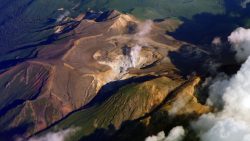
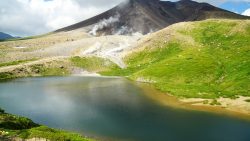
An active volcano trailing fumarolic steam beside the mystical crater lake Onnetoé, immersed in Akan's raw nature.
An active volcano and symbol of Onuma Quasi-National Park, with trails of volcanic scree leading to wide views toward Hakodate.
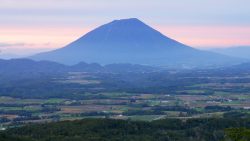
The main Niseko peak, offering a panorama of Yōteisan and the Sea of Japan from open meadows and wetland highlands.
An active Hokkaido volcano whose lava dome and outer-caldera walk deliver views of Lake Shikotsu and the Pacific.
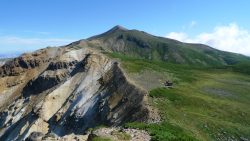
Hokkaido's highest peak, called the Garden of the Gods, with Japan's earliest autumn foliage and vast alpine terrain.
The finest peak in southern Hokkaido, celebrated for its imposing seaside silhouette rising from the Japan Sea and its summit flower meadows.
A premier viewpoint on the northwest Daisetsu, dramatic for views of the Omote-Daisetsu peaks and the wild rock towers of Ō-Yari and Angiras.
A Hokkaido isolated peak where the classic approach passes more than ten waterfalls, followed by open ridge views at the top.
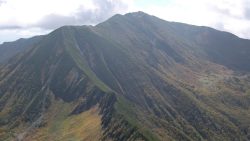
The highest peak of northern Hokkaido, a serene mountain area with a beautifully triangular ridge and rich alpine flora leading to Maeteshiodake.
One of Japan's 100 Famous Mountains and an active Hokkaido volcano dramatic at close range, renowned for Japan's earliest autumn foliage in September.
Sapporo's highest mountain, where the Haіmаtsu zone opens a summer panorama of Yōteisan and the surrounding peaks.
The main peak of the Yubari Range rising behind the Furano Plain, a strenuous climb with views of the Tokachi range.
The highest peak in the eastern Taisetsu range, with an expansive view of Nipesotsu, Tomuraushi, and the surrounding Daisetsu peaks.
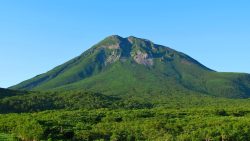
The main peak of UNESCO World Heritage Shiretoko, a primeval volcanic landscape of alpine flora and ancient forest.
The Rishiri Fuji rising from the sea, a treasury of alpine plants with the island-ringed ocean as an extraordinary backdrop.
The highest peak of the Mashike range facing the Sea of Japan, home to the endemic Mashike milk vetch and a sweeping coastal panorama.
The Ezo Fuji, a perfectly symmetrical cone, extraordinary for its crater-rim walk and more than 130 species of alpine plants.
A serpentine-rock peak home to the Yūbari Kozakura and other rare endemic plants, with a distinctive flower-lined ridge.
The Hokkaido Matterhorn and symbol of the Eastern Taisetsu, whose razor profile seen from Maetengū is among the finest in all Japan.
The Hidaka range's supreme challenge, with the Nanatsu-numa Kar, summit flower gardens, and a grand ridge panorama.
A sacred Daisetsu peak called the Garden of the Gods, with sweeping Chinguruma meadows and bog pools creating an alpine flower paradise.
A proud peak in the Hidaka range, demanding a full glacier-cirque approach and sustained rocky ridge work above the Hachinosawa Kar.
The farthest peak of the Hidaka range, known as the Distant Mountain, reached only by sustained stream and narrow-ridge travel.