
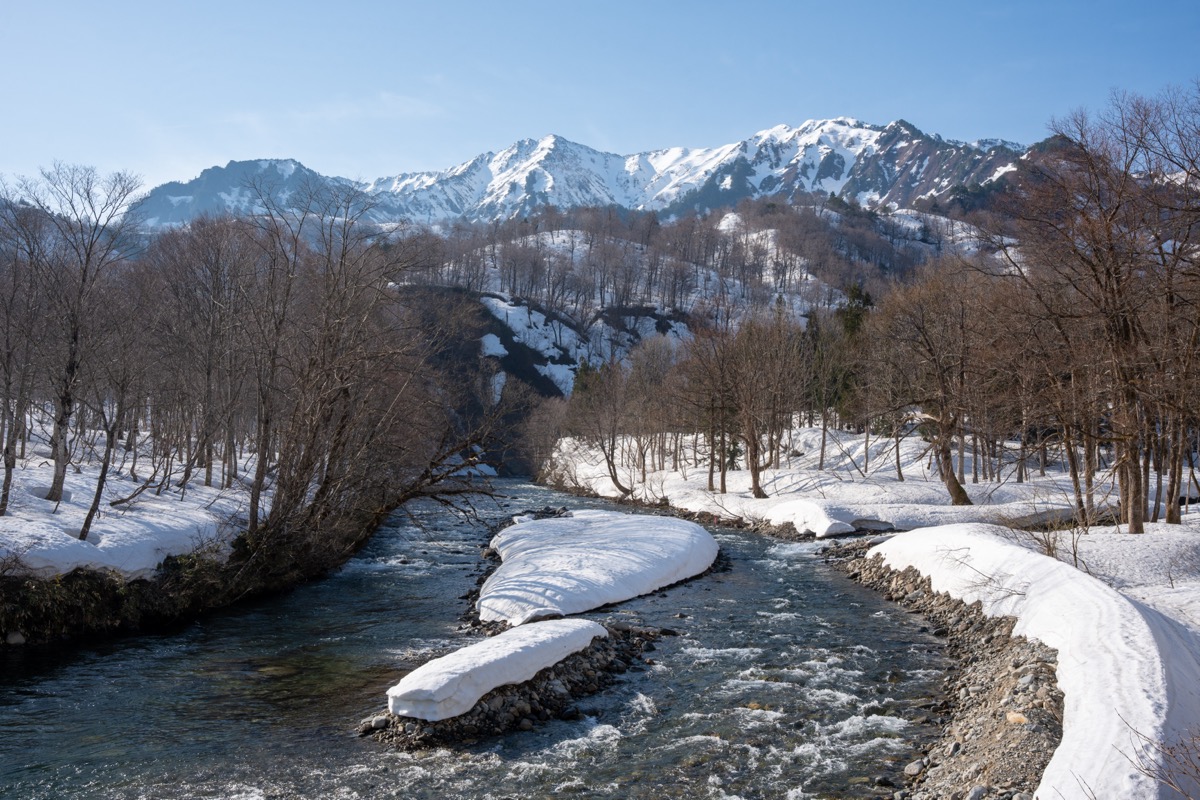
Mt. Echigo-Komagatake (越後駒ヶ岳, 2,003 m) in Uonuma City, Niigata Prefecture, is the principal peak of the Echigo Sanzan (Echigo-Komagatake, Naka-no-dake, Hakkai-san) within Echigo Sanzan Tadami Quasi-National Park — a 100 Famous Mountain of Japan (Kyūya Fukada’s selection).
Also known as “Uonuma Komagatake“, this majestic free-standing peak is best reached via the Shiori-toge course (standard, most popular), a long ridge walk through Michiyukiyama and Ogura-yama with an overnight option at Koma-no-koya (unstaffed emergency hut below the summit), intermediate ★★★ / ~9 h round trip. Famous for the “flowing-cloud waterfall” (taki-gumo) phenomenon at dawn and the yellow-daylily fields in summer / autumn colours.
How to access the trailheads
- [Outbound] Tokyo / Osaka → Koide Station (JR Joetsu Shinkansen Urasa + Joetsu Line)
- [Round trip] Koide Station ⇔ Shiori-toge (Minami Echigo Kanko Bus, summer 1 run/day)
- Koma-no-koya, Ginzandaira, suggested plans
Standard times (Shiori-toge course out-and-back, intermediate, ~9 hours)
Shiori-toge (1,065 m) → (1:30) → Michiyukiyama → (1:30) → Ogura-yama (1,378 m) → (1:30) → Hyakuso-no-ike → (1:00) → Maekoma (water) → (0:30) → Koma-no-koya (1,890 m, emergency hut) → (0:30) → Mt. Echigo-Komagatake summit (2,003 m) → descent (4:00) → Shiori-toge
1. [Outbound] Tokyo / Osaka → Koide Station (JR Joetsu Shinkansen Urasa + Joetsu Line)
The base for Mt. Echigo-Komagatake is Koide Station on the JR Joetsu Line. From Tokyo Station, the JR Joetsu Shinkansen Toki reaches Urasa in about 1 h 20 min for ¥7,810; the JR Joetsu Line then reaches Koide in about 10 min for ¥210. From Osaka, ~4 h 30 min via Tokyo. From Kansai / abroad, fly to Niigata Airport (limo bus to Niigata Station, then Joetsu Line to Koide).
JR and airport access guide :
Tokyo Station → Urasa Station : JR Joetsu Shinkansen Toki about 1 h 20 min, ¥7,810 (reserved)
Urasa Station → Koide Station : JR Joetsu Line about 10 min, ¥210
Osaka Station → Koide Station : JR via Tokyo about 4 h 30 min, ~¥17,000
Niigata Airport → Koide Station : via Niigata Station, ~3 h
Reference : JR East | Niigata Tourism Mt. Echigo-Komagatake
Inquiries : JR Koide Station ☎025-792-0125
2. [Round trip] Koide Station ⇔ Shiori-toge (Minami Echigo Kanko Bus, summer 1 run/day)
For the Shiori-toge course trailhead at Shiori-toge (1,065 m), the Minami Echigo Kanko Bus (Koide Station → Oyu Onsen → Ginzandaira → Shiori-toge) takes about 1 h 5 min / ¥680 / only 1 run per day in summer (typically late June – October). Because of this limit, Ginzandaira Campsite or Koma-no-yu Onsen pre-night is the standard plan. The “Uonuma Taki-gumo Shuttle Bus” (typically late September – early November weekends/holidays) eases congestion. Self-drive: ~1 h from Kan’etsu Expressway Koide IC via Okutadami Silver Line; Shiori-toge parking ~30 spaces, free (full in peak autumn).
Operating period : Typically late June – October (summer climbing season only)
Travel time : Koide Station → Shiori-toge about 1 h 5 min
Fare : ¥680 (one way)
Frequency : 1 run/day (summer regular) + Taki-gumo Shuttle on weekends/holidays (late Sep – early Nov)
Koide Station → Shiori-toge (Minami Echigo Kanko Bus, summer 1 run/day, hiker excerpt)
| Koide Station dep. | Oyu Onsen via | Shiori-toge arr. |
|---|---|---|
| around 6:30 (summer regular, confirm) | around 6:55 | around 7:35 |
| ※ Taki-gumo Shuttle (Sep–Nov weekends/holidays) has earlier services |
Shiori-toge → Koide Station (Minami Echigo Kanko Bus, return, summer 1 run/day)
| Shiori-toge dep. | Oyu Onsen via | Koide Station arr. |
|---|---|---|
| around 15:30 (summer regular, last) | around 16:10 | around 16:35 |
Note : Operating periods and times vary by year — always confirm with Minami Echigo Kanko Bus or Uonuma City Tourism. With only 1 daily run, a same-day return is tight (arrive 7:35, last bus 15:30 = ~8 hours), so the 9-hour course is hard. Overnight at Ginzandaira / Koma-no-yu Onsen with early-morning self-drive or minshuku transfer is realistic. After descending, bathe at “Koma-no-yu Sanso” (secluded onsen, ~¥600).
Reference : Niigata Tourism Mt. Echigo-Komagatake | Snow Country Shiori-toge trailhead
Inquiries : Minami Echigo Kanko Bus ☎025-792-2151 / Uonuma City Tourism Association ☎025-792-7300
3. Koma-no-koya, Ginzandaira, suggested plans
About Mt. Echigo-Komagatake
The principal peak (2,003 m) of the Echigo Sanzan (Echigo-Komagatake, Naka-no-dake, Hakkai-san) in Uonuma City, Niigata, within Echigo Sanzan Tadami Quasi-National Park. Locally called “Uonuma Komagatake” to distinguish it from other Komagatake in Japan (Kiso, Kai, Aizu, etc.). Selected by Fukada as one of his 100 Famous Mountains, this majestic free-standing peak is famous for the “taki-gumo” (flowing-cloud waterfall) at dawn — clouds streaming down the ridge in September – October — and is popular among photographers.
Trail summary (3 main courses)
- Shiori-toge course (intermediate, ~9 h, most popular): Shiori-toge → Michiyukiyama → Ogura-yama → Koma-no-koya → summit out-and-back, long ridge walk
- Koma-no-yu course (advanced, ~12 h): from Koma-no-yu Onsen, long steep climb, for fit hikers
- Ginzandaira course (advanced, ~11 h): from Ginzandaira Campsite, long north-side approach
Huts and hot springs
– Koma-no-koya (1,890 m, below summit, no phone, unstaffed emergency hut): cooperation fee ¥2,000, bring bedding and food, toilet available, water at Maekoma (30 min downhill)
– Ginzandaira Campsite: tent / cottage, recommended for climbing pre-night, ☎025-795-2398
– Koma-no-yu Sanso: Koma-no-yu course trailhead, secluded onsen, lodging ¥10,000+, bath ¥600
– Oyu Onsen: between Koide and Shiori-toge, many inns
Climbing season / flowers: June – October. July: yellow daylily and Hakusan-kozakura flower fields; late September – October: autumn colours and taki-gumo (best for sunrise photography). Residual snow on the ridge lingers until early June.
Cautions
– Shiori-toge bus only 1 run/day: same-day return tight, pre-night recommended
– 9-hour course / limited water: only at Maekoma — carry at least 2 L
– Koma-no-koya unstaffed: bring bedding, food, water; cooperation-fee box
– Bear sightings: carry bells and pepper spray
Emergency contacts and inquiries
- Uonuma City Tourism Association: ☎025-792-7300 / Ginzandaira Campsite: ☎025-795-2398
- Minami Uonuma Police Station (climbing plan, mountain rescue): ☎025-770-9110
- Minami Echigo Kanko Bus: ☎025-792-2151 / Koma-no-yu Sanso: ☎025-792-2754
Suggested plans
- One night, Ginzandaira pre-night + Koma-no-koya day hike (recommended): Day 1 Koide → taxi (~¥6,000) or transfer → Ginzandaira overnight. Day 2 early self-drive or taxi → Shiori-toge 4:30 → Koma-no-koya 8:30 → summit 9:30 → descend → Shiori-toge 14:30 → bus 15:30 → Koide 16:35
- Two nights, Koma-no-koya overnight (recommended, enjoy): Day 1 Ginzandaira or Koma-no-yu pre-night. Day 2 early → Shiori-toge → Koma-no-koya overnight (cooperation fee, sunset + taki-gumo). Day 3 early summit (taki-gumo photography) → descend → Koma-no-yu Onsen bath → return
Reference : Niigata Tourism Mt. Echigo-Komagatake | Yamatabi Mt. Echigo-Komagatake guide
Photo by tatsushi yamasaki (Flickr)
Comments